The Myth of the Perfectly Tidy Garden
The myth of the perfectly tidy garden can make useful habitat look neglected. Learn what to keep crisp, what to leave, and how to judge the difference.
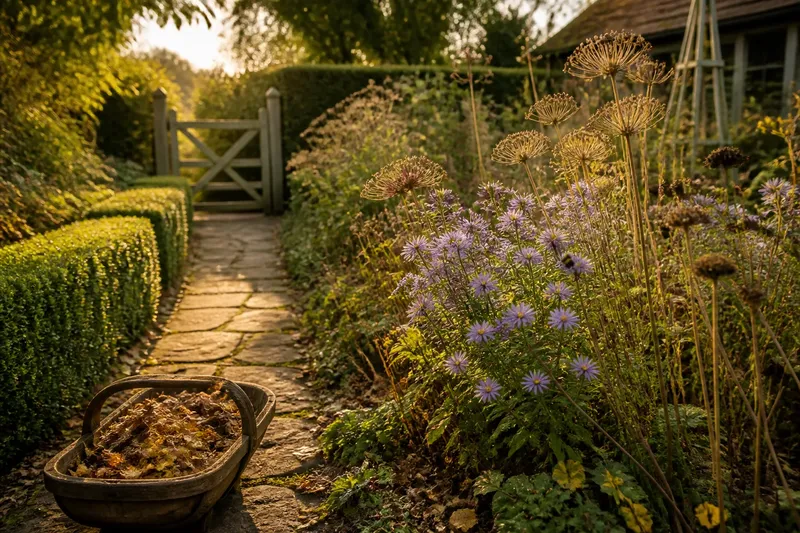
You are halfway along the path with a trug of fallen leaves when you notice the seed heads still standing above the border. The garden looks less polished than the neighbour’s, but bees are visiting and the stems catch the low light. The myth of the perfectly tidy garden says those two things cannot belong together. They can.
Care is not the same as uniformity. A garden can have deliberate edges and useful places for wildlife, or an untidy corner can simply be an untended one. The helpful question is not whether everything looks neat. It is whether each visible choice has a purpose you want to keep.
Read the structure
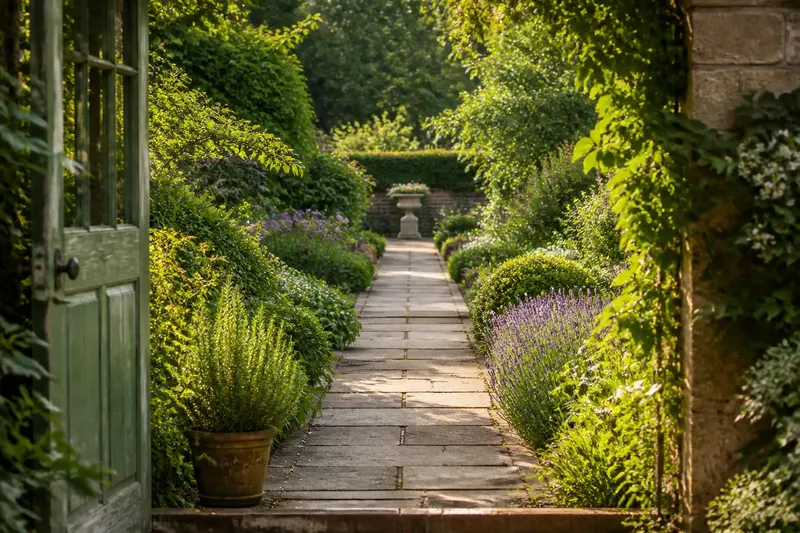
Start with the parts that organise the view: a mown path, a clipped hedge, a clear entrance, or a border edge. These lines tell the eye where to go. If they remain legible, looser planting nearby often looks intentional rather than abandoned.
Think of a garden like a room with a well-kept table and a basket of knitting beside it. Order in one place can make room for activity elsewhere. In a garden, a defined path or seating area can provide that visual order without requiring every plant to be cut back at once.
Look, too, at whether plants suit their space. A self-seeded foxglove in a gap may feel welcome; the same plant leaning across a narrow step may make the route awkward. The distinction is not tidy versus wild. It is whether the growth supports the garden’s use and character.
Choose by situation
If you need clear access
Keep paths, steps, gates, and the approach to a shed easy to use. Trim plants that obstruct a route, move pots that narrow a doorway, and collect slippery fallen fruit from paving. This is practical care, not a demand that every border be bare.
If you want a formal view
Give the clipped shapes and clean lines the attention they need, then let less prominent areas be softer. A neatly edged lawn beside relaxed planting can look composed because the contrast is clear. If every patch is clipped to the same finish, the garden may lose the variation that makes its structure visible.
If wildlife is part of the plan
Leave some seed heads, leaf litter, or hollow stems where they will not block access or smother plants you want to keep. Choose a defined patch rather than letting every corner become a holding place for debris. A small sign or simple edge can make the intention clear to visitors and to you.
If maintenance feels overwhelming
Choose one visible boundary to maintain, such as the path edge or the front of a bed, and let less-used areas wait. This gives you a manageable task and a clear visual anchor. A garden does not need to look finished everywhere to show that someone is making thoughtful decisions.
Keep, cut, or clear?
When a patch looks untidy, decide what kind of problem you are seeing before reaching for shears. Ask whether it interferes with access, obscures a feature you value, or serves a purpose you want to support. If none applies, you may simply be seeing a seasonal change rather than a failure of care.
- Keep a healthy plant that is in the right place and offers useful flowers, seed, shelter, or winter shape.
- Cut back growth that blocks a path, hides a plant you want to enjoy, or has finished serving its role.
- Clear material that is diseased, damaged, or likely to cause a practical nuisance where it lies.
- Move a self-seeded plant that has landed in a poor spot, if it is suitable to transplant and the season allows.
- Wait when you cannot yet tell whether a stem is dead or simply dormant; check it again as growth resumes.
Say you have a narrow path beside a clump of autumn asters, and their stems lean over the paving. You could trim only the stems that catch sleeves and leave the rest standing behind a clear edge. The path stays usable, while the border keeps its flowers and seed heads.
Questions gardeners ask?
Does a tidy garden help wildlife?
It can, but tidiness alone does not decide whether a garden offers food or shelter. Keep useful plants and habitat in chosen places, while maintaining the routes and surfaces you need.
Should I leave leaves on the beds?
A light layer can protect soil and provide cover, but a thick, wet mat may bury small plants or sit against stems. Move excess leaves to a compost heap or a chosen wildlife corner.
How can a wild patch look intentional?
Give it a clear edge, such as a mown strip, path, or line of stones, and keep nearby access open. A named purpose—seed for birds, flowers for pollinators, or shelter—also makes the choice easier to explain and maintain.
When should I cut back perennials?
There is no single date that suits every plant and garden. Consider whether the stems still provide interest or shelter, and check the plant label or supplier’s advice when you are unsure about its needs.
Make care visible
A few consistent cues can show that a relaxed garden is being tended: an open gate, a swept seating area, a trimmed path edge, or a basket ready for cut stems. These small signals matter more than making every surface look alike. They also help you notice when a useful patch has started to spread beyond its intended place.
The myth of the perfectly tidy garden can be hard to shrug off when a neighbour’s clipped borders set the local standard. Instead, choose the level of order that fits your garden’s use, your time, and the plants you want to support. If the structure is clear and the softer growth has a reason to be there, the garden is not neglected simply because it is not uniform.
Next time you reach for the rake, pause at one patch and name its purpose. If you cannot, clear it or give it a boundary; if you can, leave it with confidence and revisit it when the season changes.